University Notes Your Online Solution

Do not foud your proper note ? We help you with all the better Notes..

Not Found Your Notes here?

Help Us to add your Subject in University notes! Just contract with Us !

A vast of subject! Select your Catagories !

This Blank space is Only for Your Subject! So fullfill this Gap By your Note!

No Need of Paper!

Just Stay with us and Study Online.. We add all the subject day by day!!

Don't Forget Us We Stay with You!

Just bookmark our page. We are staying with U until your Final destination.

Showing posts with label Exclussive. Show all posts

Top 20 American International Scholarship

American University Scholarships
American University (AU) awards a limited number of generous partial merit scholarships to academically-qualified incoming international first-year undergraduate students.  No need-based financial aid is available to international students. The merit scholarship range from U.S.$6,000 to U.S.$25,000 per academic year (renewable subject to conditions).  The University also offers the AU Emerging Global Leader Scholarship Program which awards scholarships to high-achieving international students who wish to pursue a Bachelor’s Degree at the University and who are dedicated to positive civic and social change. It is intended for students who will be to returning home to improve under-resourced, under-served communities in his/her home country.
Amherst College Scholarships
Amherst College currently runs a need-based financial aid program that provides assistance to financially needy international students.  Once you have been admitted, your financial need is determined. A financial aid award that is equal to your need will then be offered.  The award is sometimes called an “aid package” because it may include both self-help (employment) and gift aid (scholarships and grants).
Arkansas University Scholarships
International students are eligible to apply about 10 scholarships offered at the University including the Chancellor’s Scholarship and the General University Scholarships.
Berea College Scholarships
At Berea College, every admitted student is awarded a 4-year, tuition scholarship. This scholarship works in conjunction with any other grants or scholarships students receive to completely cover the cost of tuition.  Additional costs, such as room, board, and fees, may also be covered by the College, depending upon your financial need. Nearly all of their students receive additional aid for these costs.
Clark University Scholarships
Clark University offers the Global Scholars Program which are open to High school students who are NOT permanent residents or citizens of the United States, as well as U.S. citizens/permanent residents who reside overseas and will complete their entire secondary school education outside the U.S.   A scholarship of no less than $15,000 (renewable, subject to conditions) and a guaranteed $2,500 taxable stipend for a paid internship or research assistantship taken for academic credit during the summer following the sophomore or junior year is included with the award.
Colby-Sawyer College Scholarships
International students are eligible for merit-based financial aid offered by Colby-Sawyer College. The scholarship value increases based on academic ability (measured in GPA) and range from $15,000 up to $24,000 per year. The college does not meet full financial need.
Columbia College Scholarships
Columbia College offers about 20 scholarships and awards to outstanding international students. The awards are one time cash grants or 25%- 100% tuition reduction.
Concordia College Scholarships
Concordia prizes the contributions international students make on campus and is pleased to provide partial financial assistance to international students. The International Student Scholarship is based on academic ability and family need, amounting up to $25,000 per year.
Cornell University Scholarships
Cornell has a limited amount of funding available for international undergraduates, only 30-40 scholarships are awarded to students in each entering class. The scholarships are either partial or full, based on the selected student’s need.
Dartmouth College Scholarships
Dartmouth College meets the demonstrated need of all admitted undergraduates, including those from other countries. Dartmouth College has scholarships and loans available to international students, which includes an allowance for travel to the U.S..
East Tennessee State University
East Tennessee State University (ETSU) offers the International Students Academic Merit Scholarship for new international students seeking a graduate or undergraduate degree. The scholarship covers 50 percent of the total of in and out-of-state tuition and maintenance fees only. No additional fees or costs are covered. The scholarship award can only be used for study at ETSU.
East West Center Graduate Degree Scholarships
The East-West Center Graduate Degree Fellowship provides funding for up to 24 months for Master’s or Doctoral degree study for graduate students from Asia, the Pacific, and the U.S. to participate in the educational, residential, and leadership development programs at the East-West Center while pursuing graduate study at the University of Hawai’i.
Emory College Scholarships
Emory College offers need-based financial aid awards to a select group of international students each year. As well, international applicants are encouraged to apply for merit-based scholarships through the Emory University Scholars Program (November 15 deadline).
Illinois Wesleyan University Scholarships
Merit-based scholarships are offered to qualified international applicants with outstanding academic achievement and test scores on the required entrance exams. These awards range from $10,000 to $25,000 per year and are renewable for up to four years.  In addition, two full-tuition President’s International Student Scholarships may be awarded each year to two highly qualified international students.
Iowa State University International Merit Scholarships
The International Merit Scholarship is awarded to well-rounded students who have demonstrated strong academic achievement, and outstanding talent or achievements in one or more of the following areas: math and sciences, the arts, extracurricular activities, community service, leadership, innovation, or entrepreneurship.  The awards range from $4,000 to $8,000 and are renewable.
Michigan State University International Scholarships
Michigan University provides a limited number of scholarship and grants to deserving international students at the undergraduate and postgraduate level.  These financial packages are not designed to support your full academic program at MSU.
New York University Wagner Scholarships
The merit scholarships are offered to a limited number of admitted students each application cycle, including international students.  The scholarships are partial to full tuition scholarships ranging from $36,000-$70,000.
Oregon University Scholarships
Each year, the University of Oregon awards more than one million dollars in financial aid and scholarships to international students at both the undergraduate and graduate levels. One of their scholarship programs is the ICSP Scholarship which awards 30–40 competitive scholarships to international students each year. Scholarships apply to tuition only and range from $9,000–$27,000 per year.
Wesleyan University Scholarships
Wesleyan University offers limited scholarships for international students and is awarded on the basis of both exceptional qualifications and demonstrated need. In addition to the 11 Asian students who are awarded yearly under the Freeman Asian Scholars Program, they provide financial assistance to approximately 15 international students from a pool of over 400 such applicants.
University of the West Scholarships
The Lotus Scholarship (the Scholarship) is awarded to students who achieve high academic standards and demonstrate a financial need in order to attend University of the West (UWest). The Scholarship awards up to $5,000 or up to $10,000 annually to each successful applicant to apply toward his or her tuition, mandatory fees, room and board, and other expenses required for attendance at UWest.

This is the 500th post in 3 months
University Notes
alaska, USA

The Hindu AhaGuru Physics Challenge India

he Hindu AhaGuru Physics Challenge II
Details of the Hindu AhaGuru Physics Challenge 2
Step 1: Register for the Hindu AhaGuru Challenge 2. Registration Fee 999/-
Step 2: Learn and complete all the lessons in your online course
Step 3: Take the test on 25th October 2015
The test will be for 90 minutes, for a total of 100 marks. The questions will include problems that involve reasoning and calculations.
Participants will receive performance grades, certificates and winners will get attractive prizes!
Choose JUNIORS or SENIORS Category above to Register
For more details & Eligibility, Terms and Conditions please refer the Website : The Hindu AhaGuru Physics Challenge


Common mistakes in exam halls


Not many students would admit to enjoying taking exams or writing essays, but if you want to get a degree, they're an ordeal you have to survive.

So we've worked out how to make the whole thing a little less stressful. We've persuaded four academics from a range of subject areas to tell us the top 10 things students get wrong in exams and coursework. This is what they've told us:

Panic and procrastination


Sometimes a task can feel so overwhelming that it's difficult to begin, says Amber Regis, lecturer in 19th century literature at the University of Sheffield. Procrastination takes over and you just can't seem to get anything done. The bare white page is a formidable foe when it stares back at you, untouched, from the library desk. Try not to panic, protect and manage your preparation time, and don't put off getting started.

Lack of analysis


It can be tempting to parrot everything you know when writing essays and exam answers. But to demonstrate your understanding you should engage critically with your source material. Always assume an informed reader — they do not need a plot summary or biographies of key figures. Read through the marking scheme used by your department. You will notice some very telling words and phrases attached to the highest marks, for example: "originality of interpretation", "astute engagement" and "critical thought". To fulfil these criteria, you must favour analysis.

Poor planning


In exams it's vital that you don't jump the gun. Take the first five to 10 minutes to read through the paper and plan the questions you're going to answer in order of how confident you feel in that subject area, says Bhavik Patel, lecturer in physical and analytical chemistry at University of Brighton. Make sure you secure the marks on the questions that you find easiest to answer first, before attempting questions that are more difficult. The latter often make you lose confidence and time during exam conditions.

Not reading the question properly


When revising, students often rehearse answers in their head. says Roy Jackson, course leader in religion, philosophy and ethics at the University of Gloucestershire. "Although we don't deliberately intend to catch them out in exams, we do set questions that requires them to think and reflect under timed conditions. But instead students will often pick up key words in the question and write out a rehearsed response."

This can be avoided by taking some time to reflect upon the question, rather than seeing that as wasted time and rushing to fill the pages.

Focusing on word count


In both exam responses and coursework, students are often more concerned with quantity rather than quality. The best essays are those that demonstrate evidence of personal reflection and are not just trying to achieve a word limit.

Insufficient reading around a subject


During revision time, students are too selective in what they choose to read, selecting one or two books and remembering as much from those as possible. What comes across in a good essay is confidence, and this can only be achieved by demonstrating plenty of reading on a subject, so that you can be prepared for any question that you come across. This also requires giving yourself plenty of time to read, and not leaving it until a few days before an exam or assignment.

Regurgitating in-class or lecture material


In English we are looking for excitement and originality of thought backed up by evidence and we don't want you to take our formulations as gospel truth, says Martin Eve, lecturer in English literature at the University of Lincoln. Challenge – and think for yourself.

Over-generalisation


Always make sure your statements are specific and show self-awareness. Do say: "There is no one single representation of working-class life in post-50s British fiction". Don't ever go for something like: "Novels that feature the working class show us that these people..."

Carelessness


Getting characters' names or other basic factual details wrong just smacks of not caring. If you don't care enough to do this correctly when you're paying to be at university, what will an employer think when he or she is paying you?

Spelling, grammar and register


Universities have a standard academic English in which you should write. The best way to become proficient at this is to read a great number of academic journal articles and books and mirror the register, language and tone (but not the content: never plagiarise!). It can also help to write a small amount every day as a form of practice.

How to take class note

Put everything into perspective and university is 95% note-taking, 5% all the other stuff. If you can take good notes, you're on track to make the academic side of things much easier for yourself.
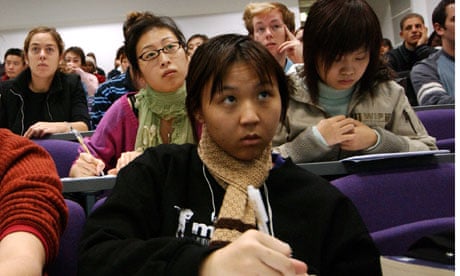
Technology is doing a lot to sort out our note-taking. One big advance is that lecture presentations are usually uploaded to a university's intranet for all to see.Students taking notes at a University of Hatfield
On the downside, this guarantee of availability gives you an excuse to zone out and let the lecturer's words drift over you. While this is tempting, it's better to listen out for the in-depth explanations that aren't on the presentation – the bits you can't access later are usually the most valuable.
When it comes to the note-taking itself, don't try to write everything down. It's an obvious point, but interesting lectures can make you want to record everything being said. This never goes well. By the time you've finished writing one point, the lecturer has already made another three and moved on. If you're determined not to miss a single syllable, use a recording device.
Handouts are just as unhelpful, especially if they're a breakdown of the lecture slides (this kind is of handout is so boring it's potentially fatal).
During the lecture, it's best to put the handouts to one side and make your notes without them. Maps and graphs can be made more useful with a few annotations, but make these crystal clear for future reference. Once you're outside a lecture theatre, notes have a tendency to lose all meaning, so make yours detailed and explicit at the first opportunity.
Shorthand is one way of ensuring speedy note-taking. Charlotte, a history student at the University of Leicester, recommends coming up with your own system for abbreviating and shortening key words and ideas. For example, civil rights movement becomes CRM; politburo becomes PB; between becomes btwn. Symbols are also useful: arrows, for example can be used to indicate concluding points.
Advertisement
Type up your shorthand notes as quickly as possible. As Charolotte says: "The longer you leave it, the less sense your markings will make."
If you're making notes from a source for an assignment, include page numbers and basic bibliographical information. "You will never regret it," says Amy, a literature student at UEA. Likewise, use colours or a different font to distinguish between your ideas and the author's or lecturer's. This helps avoid accidental plagiarism.
Once you've put time and effort into producing a good set of notes, be sure to back-up your hard work. This can be as simple as emailing your notes to yourself, or using a free tool like Google Drive or Evernote. Both let you edit uploaded documents and you can access what you've saved on-the-go.
Having a copy of your notes also means they are easier to share, and digital copies make this easier still. Google Drive is again useful, but if you're sharing notes with a revision group, something more natural, like Facebook, may be a better option.
A note-taking routine that suits your style takes a while to establish, but given that you'll probably be taking notes daily, it's worth getting into good habits from the start.

jsc/jdc result

jsc/jdc result see below............


                                                                          Result

Government of Brunei offers scholarships 2016

Eligibility

Citizens of ASEAN, OIC Commonwealth and ADC member countries and others (Including bilateral
reciprocal cooperation) are eligible to apply.
Applicants must be between the ages of 18-25 for undergraduate programs and not exceeding the age
of 35 for postgraduate programs on the 31st of July 2016.
The award is NOT eligible to Brunei permanent
residents and foreigners residing in Brunei
Darussalam.

Facility

The Scholarships cover tuition fees and other appropriate compulsory fees as determined by the institute
for the duration of the program.
One return economy class air ticket for the most economically Viable route to Brunei Darussalam will be
determined by the Government of Brunei Darussalam. No additional assistance will be provided towards
other travel expenses.
Allowances payable will include:
Monthly personal allowance of BND 500.00; Annual book allowance of BND 600.00; Monthly food
allowance of BND 150.00;
Upon completion of the Program, Baggage allowance to a maximum of BND 250.00 to a country in the
ASEAN region or BND 500.00 to countries outside the ASEAN region. An accommodation at respective
institute residential college is provided. If the scholar opts not to live in the provided accommodation no
additional allowance will be given in lieu of board and transports.
Outpatient medical and/or dental treatment is complimentary at any Brunei Government hospitals.
However an administrative charge is payable for each consultation with the government general
practitioner or specialist.
Should the scholar opts to seek medical and/or dental treatment at a private hospital or clinic; all
expenses are to be borne by the scholar himself/herself.
The scholar is not eligible to claim any other facilities apart from those aforementioned under item 3.
Important Info
Scholarship for: Diploma, PhD, Masters, Bachelor Level.
Total Scholarship: 0
Start Date: December 14, 2015
Last Date: January 09, 2016

University of Manitoba Graduate Fellowships

University of Manitoba Graduate Fellowships

University of Manitoba
Masters/PhD Degree
Deadline: varies (annual)
Study in: Canada
Course starts 2016 

Brief description:
The University of Manitoba Graduate Fellowships (UMGF) are merit-based awards that are open to students of any nationality who will be registered as full-time graduate students (Masters or PhD) at the University of Manitoba.
Host Institution(s):
University of Manitoba, Canada
Field(s) of study:
Any graduate degree programs offered by the University  (except those in the Faculty of Medicine and in the Master of Business Administration – MBA).
Target group:
All students regardless of citizenship are eligible to apply.
Scholarship value/inclusions:
The value of these fellowships is $18,000 (Ph.D.) and is $14,000 (Master’s) for a 12 month period.  Students are eligible to receive the UMGF for the first 24 months of their Master’s program and the first 48 months of their PhD program.
Eligibility:
Academic standing: Students with a minimum GPA of 3.75 (above B+) at a recognized university based on a Bachelor, Masters, Graduate Diploma or a Doctoral degree. Please use admissions criteria in calculating GPA, i.e., last 60 credit hours or equivalent.
Citizenship: All students regardless of citizenship are eligible to apply.
Fields of study: Students in all fields of graduate study (with the exception of those in the Faculty of Medicine and in the Master of Business Administration [MBA]) are eligible to apply.
You must also meet the specific eligibility criteria set by the Department/Faculty, if any.
Application instructions:
Please check with your department/faculty for details on how to be considered for a UMGF. Deadline varies per faculty.
It is important to visit the official website (link found below) for detailed information on how to apply for this scholarship.
Website:

10 common Interview Questions!


1.  Tell me about yourself.

This question seems easier than it is. How do you reduce your whole life to a few sentences?  it's hard to avoid commonplace answers like "I'm friendly" or "I'm a good student." Of course you want to demonstrate that you're friendly and studious, but try also to say something memorable here that really makes you different from other college applicants. Can you hold your breath longer than anyone in your school? Do you have a huge collection of Pez dispensers? Do you have unusual cravings for sushi?

2.  Why are you interested in our college?

Be specific when answering this, and show that you've done your research. Also, avoid answers like "I want to make a lot of money" or "Graduates of your college get good job placement." You want to highlight your intellectual interests, not your materialistic desires. What specifically about the college distinguishes it from other schools you're considering?
3.  What can I tell you about our college?

You can almost guarantee that your interviewer will provide an opportunity for you to ask questions. Make sure you have some, and make sure your questions are thoughtful and specific to the particular college. Avoid questions like "when is the application deadline?" or "how many majors do you have?" This information is both uninteresting and readily available on the school's webpage. Come up with some probing and focused questions: "What would graduates of your college say was the most valuable thing about their four years here?" "I read that you offer a major in interdisciplinary studies. Could you tell me more about that?"

4.  Who in your life has most influenced you?

There are other variations of this question: Who's your hero? What historical or fictional character would you most like to be like? This can be an awkward question if you haven't thought about it, so spend a few minutes considering how you would answer. Identify a few real, historical, and fictional characters you admire, and be prepared to articulate WHY you admire them.

5.  Why do you want to major in ______________ ?

Realize that you don't need to have decided upon a major when you apply to college, and your interviewer will not be disappointed if you say you have many interests and you need to take more classes before choosing a major. However, if you have identified a potential major, be prepared to explain why. Avoid saying that you want to major in something because you'll make a lot of money -- your passion for a subject will make you a good college student, not your greed.

6.  What will you contribute to our campus community?

You'll want to be specific when answering this question. An answer like "I'm hard-working" is rather bland and generic. Think about what it is that makes you uniquely you. What exactly will you bring to diversify the college's community?

7.  Tell me about a challenge that you overcame.

This question is designed to see what kind of problem solver you are. When confronted with a challenge, how do you handle the situation? College will be full of challenges, so the college wants to make sure they enroll students who can handle them.

8.  What do you do for fun in your free time?

"Hangin' out and chillin'" is a weak answer for this question. College life obviously isn't all work, so the admissions folks want students who will do interesting and productive things even when they aren't studying. Do you write? hike? play tennis? Use a question such as this one to show that you are well-rounded with a variety of interests.

9.  What do you see yourself doing 10 years from now?

You don't need to pretend that you have your life figured out if you get a question like this. Very few students entering college could accurately predict their future professions. However, your interviewer does want to see that you think ahead. If you can see yourself doing three different things, say so -- honesty and open-mindedness will play in your favor.

10.  Does your high school record accurately reflect your effort and ability?

In the interview or on your application, you often have an opportunity to explain a bad grade or a bad semester. Be careful with this issue -- you don't want to come across as a whiner or as someone who blames others for a low grade. However, if you really did have extenuating circumstances, let the college know.

50 American Scholarship for 2016

41.  Kirt Brooks Memorial Water Environment Scholarship

• Award: Varies
• Deadline: January 15, 2016
• Description: This scholarship is for members of CWEA and individuals sponsored by a member of CWEA who are pursuing careers in the water environment industry.
• Administered by the California Water Environment Association (CWEA)
•
Get more information (Cappex)

42.  Girls Impact the World Film Festival Scholarships

• Award: $1,000 - $5,000
• Deadline: January 15, 2016
• Description: Applicants must submit a three- to five-minute film that raises awareness about current issues affecting women and girls and/or proposes solutions to current challenges faced by women.
• Administered by Connecther
•
Get more information (Cappex)

43.  DECA Student Scholarships

• Award: $1,000 - $2,000
• Deadline: January 15, 2016
• Description: This scholarship is for current DECA members at the national level.
• Administered by the Distributive Education Clubs of America (DECA)
•
Get more information (Cappex)

44.  EditRevise $10,000 Scholarship Essay Contest

• Award: $10,000
• Deadline: January 15, 2016
• Description: To enter this contest, applicants must submit any college essay.
• Administered by EditRevise
•
Get more information (Cappex)

45.  Franks Gerkin McKenna Illinois Perseverance Scholarship

• Award: $1,000
• Deadline: January 15, 2016
• Description: To apply, create a short video and essay talking about a given topic.
• Administered by Franks Gerkin McKenna
•
Get more information (Cappex)

46.  Heritage Classic Foundation Scholar Program

• Award: $18,000 - $20,000
• Deadline: January 15, 2016
• Description: This scholarship is for graduating high school seniors who live in Beaufort County, South Carolina.
• Administered by the Heritage Classic Foundation
•
Get more information (Cappex)

47.  Koniag Angayuk Scholarship & Internship

• Award: $10,000
• Deadline: January 15, 2016
• Description: Applicants must be Alaska Native shareholders or descendants (may be adopted) of the Koniag Region.
• Administered by the Koniag Education Foundation
•
Get more information (Cappex)

48.  MetLife Foundation Pathways Scholarship Program

• Award: $500 - $3,000
• Deadline: January 15, 2016
• Description: This scholarship is for children of employees of MetLife. • Administered by the MetLife Foundation
•
Get more information (Cappex)

49.  Minnesota Power Community Involvement Scholarship

• Award: $2,500
• Deadline: January 15, 2016
• Description: This scholarship is for high school seniors who reside in the Minnesota Power service territory.
• Administered by the Minnesota Power Foundation
•
Get more information (Cappex)

50.  Earl Collins Foundation Scholarship

• Award: $1,000
• Deadline: January 15, 2016
• Description: This scholarship is for Missouri high school seniors who are Key Club members.
• Administered by the Missouri-Arkansas District, Kiwanis International
•
Get more information (Cappex)

For Previous post please search scholarship tags.


10 common Interview Mistake for College & University Admission


1.  Be Late

Your interviewers are busy people. Alumni interviewers are probably taking time out of their full-time jobs to meet with you, and campus admissions folks often have back-to-back appointments scheduled. Lateness disrupts schedules and shows irresponsibility on your part.

2.  Underdress

Business casual is your safest bet, but the main thing is to look neat and put-together. You'll look like you don’t care if you show up wearing ripped jeans or saran wrap. These clothing tips for men and women can help.

3.  Talk Too Little

Your interviewer wants to get to know you. If you answer every question with a "yes," "no," or a grunt, you're not impressing anyone, and you're not demonstrating that you can contribute to the intellectual life of the campus.

4.  Make a Prepared Speech

You want to sound like yourself during your interview. If you have prepared answers to questions, you might come off sounding artificial and insincere.

5.  Chew Gum

It's distracting and annoying.

6.  Bring Your Parents

Your interviewer wants to get to know you, not your parents. Also, it's hard to look like you're mature enough for college if Dad is asking all the questions for you.

7.  Show Disinterest

This should be a no-brainer, but you’d be surprised what some students will say. A comment like "you're my back-up school" or "I'm here because my parents told me to apply" is an easy way to lose points during the interview.

8.  Fail to Research the College

If you ask questions that could easily be answered by the college's website, you'll send the message that you don't care enough about the school to do a little research. Ask questions that show you know the place: "I'm interested in your Honors Program; could you tell me more about it?"

9.  Lie

This should be obvious, but some students do get themselves in trouble by fabricating half truths or exaggerating during the interview.

10.  Be Rude

Good manners go a long way. Shake hands. Address your interviewer by name. Say "thank you." Introduce your parents if they are in the waiting area. Say "thank you" again. Send a thank you note.

Common Mistake of American College Application

1. Missing Deadlines
The college admissions process is filled with deadlines, and missing a deadline can mean a rejection letter or lost financial aid. A typical college applicant has dozens of dates to remember:
  • Application deadlines which vary from school to school
  • Early action and early decision deadlines, if applicable
  • Institutional financial aid deadlines
  • Federal financial aid deadlines
  • State financial aid deadlines
  • Scholarship deadlines

2. Applying for Early Decision When It’s Not the Right Choice
Students who apply to a college through Early Decision typically must sign a contract stating that they are applying to just the one college early.

Early Decision is a restricted admissions process, so it is not a good choice for students who aren’t really sure that the Early Decision school is their first choice. Some students apply through Early Decision because they think it will improve their chance of admission, but in the process they end up restricting their options. Also, if students violate their contract and apply to more than one college through Early Decision, they run the risk of being removed from the applicant pool for misleading the institution.
3. Using the Wrong College Name in an Application Essay
Understandably, many college applicants write a single admissions essay and then change the name of the college for different applications. Applicants need to make sure the college name is correct everywhere it appears. The admissions officers will not be impressed if an applicant begins by discussing how much she really wants to go to Alfred University, but the last sentence says, “R.I.T.

4. Applying to a College Online Without Telling School Counselors
The Common Application and other online options make it easier than ever to apply to colleges. Many students, however, make the mistake of submitting applications online without notifying their high school guidance counselors. Counselors play an important role in the application process, so leaving them out of the loop can lead to several problems:
  • High school transcripts are delayed or never get mailed
  • Letters of recommendation from teachers are delayed or never get sent
  • The college admissions decision process becomes inefficient and delayed
  • Applications end up being incomplete because the counselor can’t follow up with the colleges
5. Waiting too Long to Ask for Letters of Recommendation
Applicants who wait until the last minute to ask for letters of recommendation run the risk that the letters will be late, or they will not be thorough and thoughtful. To get good letters of recommendation, applicants should identify teachers early, talk with them, and give them as much information as possible about each program to which they are applying. This allows teachers to craft letters that match an applicant’s particular strengths with specific college programs. Letters written at the last minute rarely contain this type of useful specificity.

About london school of economics and political science

At LSE, you will have the chance to study a broad range of subjects. Some of them you may have studied in school, some will be new to you. At one end of the spectrum are subjects you might consider 'arts' subjects like history, while at the other end you will find mathematics and related subjects. Some subjects have a direct vocational or professional link, like law or actuarial science. All are a useful intellectual training in different approaches to social questions.
Each subject has its own section describing the degrees and courses available. Use the degree programmes menu item on the left to find what is on offer.
The School offers a unique opportunity to study the social sciences in a university institution with a worldwide academic reputation, while enjoying the cultural, social and recreational facilities of one of the world's great capital cities. Many influential developments in thinking about society, economics and politics have originated in work carried out at the School, including the basis of the modern welfare state and the development of free-market economics.
A montage of photos showing students and different areas of LSE Campus

What we study

LSE seeks to promote the impartial pursuit of knowledge and understanding about how people organise themselves into, and interact within, social groupings. The social sciences offer a number of ways of investigating and thinking about these questions: they do not teach you a correct way to solve the world's problems. The focus of our teaching is on helping you to learn some of the different ways to test your - and other people's - ideas: and, in the words of our motto, rerum cognoscere causas, 'to understand the causes of things'. In most of our degrees, we expect students to take at least one course in a subject outside their particular specialism.
The School offers courses not only in economics and political science, but also in a wide range of social science subjects, taught within a number of departments and interdisciplinary institutes. It is the only university in the UK specialising in the study of the social sciences, and has a worldwide reputation in the field. In the 2014 Research Excellence Framework (REF) the School topped or came close to the top of a number of rankings of research excellence. LSE's academic departments have also achieved outstanding results in the HEFCE/QAA teaching quality assessment/subject review exercises; and a range of independent and authoritative assessments have judged the School to be among the world's leading institutions for study of the social sciences.
While aiming for the highest standards of independent judgement, we seek to make our work practical and relevant to the real world. Teaching draws on the insights derived from our academic staff's current research. This can be an exploration of theoretical or technical developments in an academic subject, but much is also applied to topical and practical concerns.
Many past and present members of staff act as expert advisers to political parties, the Civil Service and policy pressure groups. For instance, Professor David Metcalf is chair of the independent UK Migration Advisory Committee, Emeritus Professor Lord Layard, founder of the Centre for Economic Performance, is a prominent expert on happiness and well-being and Dr Arjan Gjonca recently chaired the Commission for Reform in Higher Education in Albania.
The School's international reputation and London location ensure that in times of crisis it is to LSE that the media turn first for a response. Professor Nicholas Stern (climate change), Professor Conor Gearty (human rights), Professor Tim Newburn (crime), Professor Anne Power (housing policy), Professor Tony Travers (London and local government) and Professor Danny Quah (the weightless economy) will all be familiar names to the average news addict.

LSE100 - The LSE Course: Understanding the causes of things

LSE is a unique institution with a distinctive teaching programme. A new element of this is LSE100, which introduces first year undergraduates to the fundamental elements of thinking as a social scientist by exploring real problems and real questions. LSE100 is a compulsory course for all undergraduate students. You can also view the LSE 100 video.
A student listening attentively

Why choose LSE?

The School's location in central London is fundamental to its identity. When you choose to be an undergraduate at LSE, you are choosing not only a course of study, but a place to live and work for three years. LSE looks out over the London skyline, rather than over green fields. It is stimulating, cosmopolitan and very much a part of the 'real world'.
These qualities derive from the variety of its staff and students (about half our undergraduate students come from outside Britain, and about half the student body are postgraduates), from its active academic debate on current social, economic and political concerns, and from the easy interchange of ideas between the School and the world outside. Government, Parliament, the business and financial institutions of the City, the Law Courts and the media are all on the School's doorstep. Each year, there are many influential outside speakers at the School (politicians, business leaders and industrialists) as well as leading academics from all around the world who visit to participate in teaching, to give public lectures and to pursue their own research. LSE is compact and full to the brim with students and staff - this just contributes to the vitality and friendliness of the place.
LSE offers you the opportunity - and the challenge - to study different ways of understanding human society together with people from all parts of the world, with radically differing experiences, views and beliefs, in an atmosphere that encourages you to question ideas and to seek solutions to problems. If you welcome the stimulus of new experiences and ideas in a lively capital city - then choose LSE.

Top Universities in Europe Rankings® 2015/16


It may be the second-smallest continent on Earth, but Europe claims many of the world’s best educational institutions. In the QS World University Rankings® 2015/16 a total of 338 European universities are featured within the world’s top 800 (roughly 42%). The UK boasts Europe’s highest number of internationally ranked universities with 70 entries, followed by Germany (43) and France (41). Meanwhile Switzerland claims one of the world’s top 10 universities, with a second entrant in the top 15, leading a group of smaller European countries with very strong higher education systems.

With such a large selection of top universities in Europe to choose from, deciding where to study in Europe is not always easy. To help you get started, we’ve compiled a list of the top universities in Europe categorized by country, based on the QS World University Rankings 2015/16.
Top universities in Austria University of Vienna

A landlocked country in central Europe, Austria shares borders with eight other European nations, including Germany to the north and Italy to the south. It has seven top European universities currently included in the QS World University Rankings. Of these, the top universities in Austria are:

1.      University of Vienna (153rd in the world;  65th in Europe)

2.      Vienna University of Technology (197th in the world;  88th in Europe)

3.      Universität Innsbruck (joint 295th in the world; joint 133rd in Europe)

4.      Karl-Franzens-Universität Graz (431-440 in the world; 195th in Europe)

5.      Johannes Kepler University Linz (551-600 in the world; 237th in Europe)

+ 2 more top universities in Austria
Top universities in Belgium KU Leuven Belgium

Known for its fine chocolate and beer, Belgium is also home to some excellent educational establishments. Like Austria, it claims seven of the top universities in Europe to be internationally ranked, all of these placed within the top 300 worldwide. The top universities in Belgium are:

1.      KU Leuven (joint 82nd in the world; 30th in Europe)

2.      Ghent University (joint 124th in the world; 50th in Europe)

3.      Université Catholique de Louvain (UCL, joint 149th in the world; 63rd in Europe)

4.      Vrije Universiteit Brussel (VUB, 194th in the world; 87th in Europe)

5.      Université Libre de Bruxelles (ULB, 207th in the world; 92nd in Europe)

+ 2 more top universities in Belgium
Top universities in France Ecole Normale Superieure Paris

France boasts a very extensive selection of top European universities, and an impressive presence in the international rankings, with the majority of its top 10 universities located in the capital city of Paris. The top universities in France are:

1.      Ecolé Normale Supérieure, Paris (23rd in the world; 10th in Europe)

2.      Ecolé Polytechnique (40th in the world; 13th in Europe)

3.      Université Pierre et Marie Curie (UPMC, joint 137th in the world; 57th in Europe)

4.     CentraleSupélec (new this year – joint 156th in the world and joint 68th in Europe)

5.      Ecole Normale Supérieure de Lyon (joint 188th in the world; joint 84th in Europe)

+ 36 more top universities in France
Top universities in Germany Technische Universität München

Offering free tuition to all undergraduate students, regardless of nationality, Germany is the world’s most popular non-Anglophone destination for international students. The top universities in Germany are:

    Technische Universität München (60th in the world; 17th in Europe)
    Ruprecht-Karls-Universität Heidelberg (66th in the world; 20th in Europe)
    Ludwig-Maximilians-Universität München (75th in the world, 25th in Europe)
    Kit, Karlsruher Institut Für Technologie (93rd in the world, 35th in Europe)
    Freie Universität Berlin (119th in the world, 47th in Europe)

+ 37 more top universities in Germany
Top universities in Ireland Trinity College Dublin

A relatively small country in Western Europe, Ireland is home to eight world-ranking universities, of which half are located in the capital city, Dublin. The top universities in Ireland are:

1.      Trinity College Dublin (78th in the world; 28th in Europe)

2.      University College Dublin (154th in the world; 66th in Europe)

3.      University College Cork (joint 233rd in the world; joint 104th in Europe)

4.      National University of Ireland, Galway (joint 271st in the world; 124th in Europe)

5.      Dublin City University (353rd in the world; 159th in Europe)

+ 3 more top universities in Ireland
Top universities in Italy University of Bologna

Located in the southern peninsula of the continent and much-loved for its weather, cuisine and beautiful settings, Italy is the fifth most populous country in Europe and boasts 26 internationally ranked universities. The top universities in Italy are:

1.      Politecnico di Milano (187th in the world, 83rd in Europe)

2.      University of Bologna (joint 204th in the world; 91st in Europe)

3.      Sapienza University of Rome (joint 213th in the world; 95th in Europe)

4.      University of Milano (306th in the world; 137th in Europe)

5.      Università Degli Studi Di Padova (joint 309th in the world, 139th in Europe)

 + 21 more top universities in Italy
Top universities in the Netherlands University of Amsterdam

This Dutch-speaking country towards the north of the continent (often referred to as Holland, though in fact the region of Holland only makes up two of its provinces), boasts 13 globally ranked universities. The top universities in the Netherlands are:

1.      University of Amsterdam (55th in the world; 15th in Europe)

2.      Delft University of Technology (64th in the world; 19th in Europe)

3.      Utrecht University (94th in the world; 36th in Europe)

4.      Leiden University (95th in the world; 37th in Europe)

5.      University of Groningen (100th in the world; 39th in Europe)

+ 7 more top universities in the Netherlands
Top universities in the Nordic countries University of Copenhagen

Europe’s Nordic countries (Denmark, Finland, Iceland, Norway and Sweden) offer 26 internationally ranked universities. Within the Nordic region, Finland claims the highest number of ranked institutions, despite being the most sparsely populated country in Europe, while Denmark offers the highest-ranked university in the group. The top universities in the Nordic countries are:

Denmark

1.      University of Copenhagen (69th in the world; 22nd in Europe)

2.      Aarhus University (107th in the world; 42nd in Europe)

+ 3 more top universities in Denmark

Finland

1.      University of Helsinki (joint 96th in the world; 38th in Europe)

2.      Aalto University (joint 139th in the world; joint 59th in Europe)

+ 7 more top universities in Finland

Norway

1.      University of Oslo (joint 135th in the world; joint 55th in Europe) University of Oslo

2.      University of Bergen (181st in the world; 79th in Europe)

+ 2 more top universities in Norway

Sweden

1.      Lund University (joint 70th in the world; joint 23rd in Europe)

2.      KTH Royal Institute Of Technology (92nd in the world; 34th in Europe)

+6 more top universities in Sweden
Top universities in Russia Lomonosov Moscow State University

If you think size matters when it comes to deciding where to study in Europe, then perhaps you’ll consider Russia, the largest country in the world, and home to 21 universities included in the QS World University Rankings. The top universities in Russia are:

1.      Lomonosov Moscow State University (108th in the world; 43rd in Europe)

2.      Saint-Petersburg State University (joint 256th in the world; joint 119th in Europe)

3.      Novosibirsk State University (317th in the world; joint 143rd in Europe)

4.      Bauman Moscow State Technical University (joint 338th in the world; joint 153rd in Europe)

5.      Moscow State Institute of International Relations (MGIMO-University, joint 397th in the world; joint 179th in Europe)

+ 16 more top universities in Russia
Top universities in Spain University of Barcelona

Acclaimed for its buzzing cities and attractive Mediterranean coast, Spain is popular among tourists and students alike, and claims 18 of the top European universities according to the QS World University Rankings. The top universities in Spain are:

1.      University of Barcelona (joint 166th in the world; joint 72nd in Europe)

2.      Universidad Autónoma de Madrid (186th in the world; 82nd in Europe)

3.      Universitat Autonóma de Barcelona (joint 190th in the world; 86th in Europe)

4.      University Complutense Madrid (UCM - 226th in the world; 99th in Europe)

5.      University of Navarra (joint 265th in the world; joint 122nd in Europe)

+ 13 more top universities in Spain
Top universities in Switzerland ETH Zurich

Home to a large portion of the Alps mountain range, Switzerland is the only country other than the US or the UK to claim a university in the world’s top 10. It has a second entrant in the top 15, and half of its eight internationally ranked universities are in the global top 100. The top universities in Switzerland are:

1.      ETH Zurich (Swiss Federal Institute of Technology, 9th in the world; 5th in Europe)

2.      Ecolé Polytechnique Fédérale de Lausanne (EPFL, 14th in the world; 6th in Europe)

3.      University of Zurich (UZH, joint 85th in the world; 31st in Europe)

4.      University of Geneva (joint 89th in the world; 33rd in Europe)

5.      University of Basel (joint 139th in the world; joint 59th in Europe)

+ 3 more top universities in Switzerland
Top universities in the UK University of Cambridge

Second only to the US in overall rankings presence, the UK has the continent’s largest selection of internationally ranked institutions, and is also the most popular destination to study in Europe. It currently boasts four of the world’s top 10 universities, and seven of the 10 top universities in Europe. The top universities in the UK are:

1.      University of Cambridge (joint 3rd in the world; 1st in Europe)

2.      University of Oxford (6th in the world; 2nd in Europe)

3.      UCL (University College London; 7th in the world; 3rd in Europe)

4.       Imperial College London (8th in the world; 4th in Europe)   

5.      King’s College London (KCL; joint 19th in the world; 7th in Europe)

+ 65 more top universities in the UK
Top universities in Greece  National Technical University of Athens

1.      National Technical University of Athens (joint 376th in the world; joint 171st in Europe)

2.      Aristotle University of Thessaloniki (461-470 in the world; 205th in Europe)

+ 4 more top universities in Greece
Best of the rest…

The list above covers most of the best-known places to study in Europe as an international student. But the top universities in Europe do not end there; many more European countries are home to one or more institutions included in the QS World University Rankings. Here’s a quick round-up of the rest:

Belarus Belarus State University

1.      Belarus State University (421-430 in the world; 192nd in Europe)

2.      Belarusian National Technical University (701+ in the world; 284th in Europe)

Bulgaria

1.      University of St. Kliment Ohridski (701+ in the world; 299th in Europe)

Croatia

1.      University of Zagreb (701+ in the world; 332nd in Europe)

Czech Republic Charles University

1.      Charles University (279th in the world; 127th in Europe)

2.      Czech Technical University in Prague (451-460 in the world; 202nd in Europe)

+ 2 more top universities in the Czech Republic

Estonia

1.      University of Tartu (joint 400th in the world; joint 182nd in Europe)

2.      Tallinn University of Technology (601-650 in the world; 260th in Europe)

Hungary

1.      University of Szeged (501-550 in the world; 234th in Europe) University of Szeged

2.      Eötvös Loránd University (601-650 in the world; 253rd in Europe)

+ 2 more top universities in Hungary

Latvia

1.      University of Latvia (701+ in the world; 330th in Europe)

Lithuania

1.      Vilnius University (501-550 in the world; 236th in Europe)

2.      Kaunas University of Technology (701+ in the world; 288th in Europe)

+ 2 more top universities in Lithuania

Poland University of Warsaw

1.      University of Warsaw (344th in the world; 156th in Europe)

2.      Jagiellonian University (411-420 in the world; 186th in Europe)

+ 4 more top universities in Poland

Portugal

1.      University of Porto (308th in the world; 138th in Europe)

2.      Universidade Nova de Lisboa (joint 351st in the world; joint 157th in Europe)

+ 3 more top universities in Portugal

Romania

1.      University of Bucharest (651-700 in the world; 276th in Europe) University of Bucharest

2.      Alexandru loan Cuza University (701+ in the world; 280th in Europe)

+ 2 more top universities in Romania

Serbia

1.      University of Belgrade (701+ in the world; 323rd in Europe)

Slovenia

1.      University of Ljubljana (551-600 in the world; 249th in Europe)

Ukraine

Taras Shevchenko National University of Kyiv

1.      Taras Shevchenko National University of Kyiv (421-430 in the world; 192nd in Europe)

2.      V.N. Karazin Kharkiv National University (491-500 in the world; 220th in Europe)

+ 4 more top universities in Ukraine

This article was originally published on 14 November 2013. It was last updated on 21 September 2015 to reflect the results of the QS World University Rankings® 2015/16.

Best 50 University in Africa

Top 50 Universities and  in Africa.


1  University of Cape Town
South Africa
2  University of South Africa
South Africa
3  University of Pretoria
South Africa
4  Universiteit Stellenbosch
South Africa
5  University of the Witwatersrand
South Africa
6  Cairo University
Egypt
7  University of Dar es Salaam
Tanzania
8  Rhodes University
South Africa
9  Mansoura University
Egypt
10  University of Nairobi
Kenya
11  Alexandria University
Egypt
12  University of KwaZulu-Natal
South Africa
13  Ain Shams University
Egypt
14  The American University in Cairo
Egypt
15  Assiut University
Egypt
16  Université Mohammed V - Agdal
Morocco
17  University of the Western Cape
South Africa
18  University of Johannesburg
South Africa
19  Université de Ouagadougou
Burkina Faso
20  North-West University
South Africa
21  Benha University
Egypt
22  University of Ghana
Ghana
23  Makerere University
Uganda
24  Nelson Mandela Metropolitan University
South Africa
25  Université Abou Bekr Belkaid Tlemcen
Algeria
26  The German University in Cairo
Egypt
27  Universidade Eduardo Mondlane
Mozambique
28  Obafemi Awolowo University
Nigeria
29  Université de la Reunion
Reunion
30  University of Khartoum
Sudan
31  University of Lagos
Nigeria
32  Zagazig University
Egypt
33  Université Cheikh Anta Diop
Senegal
34  Université Abdelhamid Ibn Badis Mostaganem
Algeria
35  Université des Frères Mentouri de Constantine 1
Algeria
36  University of Swaziland
Swaziland
37  Helwan University
Egypt
38  University of Botswana
Botswana
39  Université El Hadj Lakhdar de Batna
Algeria
40  Addis Ababa University
Ethiopia
41  Al Akhawayn University
Morocco
42  Université d’Alger 
Algeria
43  Sudan University of Science and Technology
Sudan
44  University of Zimbabwe
Zimbabwe
45  Université Mouloud Maameri de Tizi Ouzou
Algeria
46  South Valley University
Egypt
47  Université Mohammed V - Souissi
Morocco
48  Université Cadi Ayyad
Morocco
49  Covenant University
Nigeria
50  Minoufiya University
Egypt


This Rangking is based on 4icu.org University Web Ranking